
Sociology
Our program helps you prepare for a wide range of careers by addressing the most pressing issues of our time. Sociology has a broad scope and relevance for research, theory, law, and social policy.
Our program focuses on the interdisciplinary view of crime and its control, including policing, crime prevention through personal change and community development. You develop broad skills and take classes in criminology, law, policing, sociology, and forensic studies.
 Full Time
 Rolling Admission
Bachelor of Arts
38
Minor
19
Our criminal justice program focuses on thinking critically about crime and justice, including understanding the causes, consequences, and responses to criminal behavior. Students take classes in criminology, law, policing, and sociology and have experiential learning opportunities through internships and faculty-led research.

Criminal justice courses are taught by faculty who have in-depth experience as criminal justice attorneys, gang unit and state police officers, medical examiners, and probation administrators. The program offers you opportunities to study within agencies dealing with crime and justice and take courses that study the full range of issues related to the social nature of crime, criminal law, and social control.
You must complete 38 credits in criminal justice. These include six required courses that total 20 credits.
For more information, and to see a complete list of degree requirements, visit the Course Catalog.
Explore a few of the exciting criminal justice course offerings.
Introduction to Criminal Justice
The course introduces the ideologies of crime and crime control; the determination of rates of crime; the structure, operation, and effectiveness of the major criminal justice agencies; and contemporary issues in crime control.
Criminology
An in-depth analysis of the sociological factors associated with crime and criminality and the examination of definitions of criminal activity, measures of crime and the organization of criminal behaviors.
Crime, Law, and the Administration of Justicee
The senior capstone course is an interdisciplinary seminar that focuses on major issues of current interest in criminal justice.
For more information, and to see a complete list of course offerings, visit the Course Catalog.
For more information, and to see a complete list of electives, visit the Course Catalog.
The criminal justice minor requires you take the following courses, plus completion of an internship or one of the Electives listed above.
For more information, and to see a complete list of minor requirements, visit the Course Catalog.
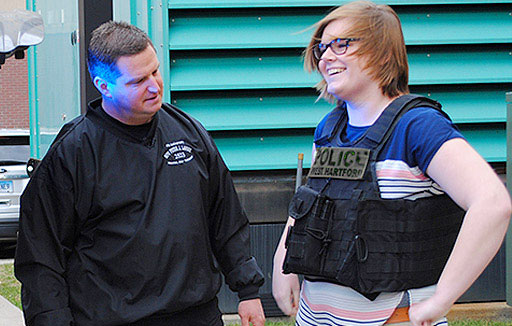
Our recent criminal justice graduates are working in:
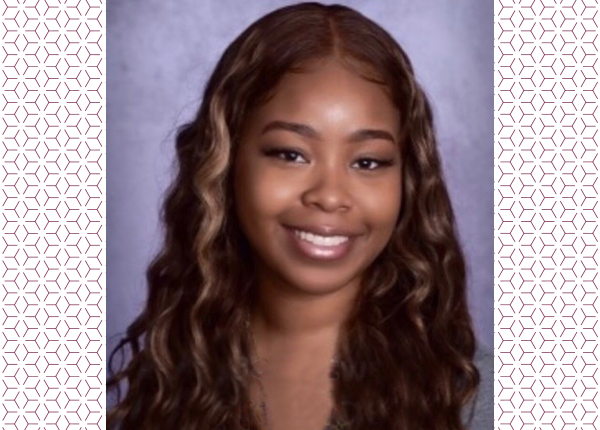
Alexia Desir ’21 is an investigator for the Child Support Enforcement Team of Rockland County, New York’s Department of Social Service, where her responsibilities include investigating absent parents with court-ordered child support obligations and enforcing them.
Desir says the criminal justice program can be applied to so many different career paths. “Internships are your best friends, “she says. “They give you a real-world experience of what your career could be. You can learn what you like and dislike early on and narrow down your job search.”
Read more about Alexia
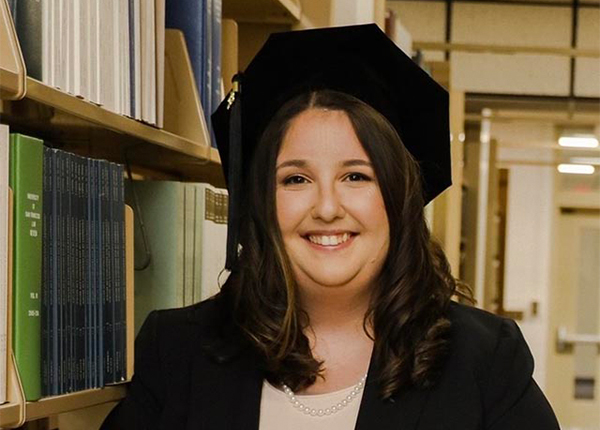
Courtney Hyman ’20 recently graduated from Western New England Law School and now serves as a staff attorney with Community Legal Aid’s Family Law Unit in Northampton, Massachusetts. There she provides legal assistance to domestic violence victims and other vulnerable clients in cases involving restraining orders, divorce, paternity, custody and visitation, child support, health insurance, and name change petitions.
Courtney says she knew she wanted to be a lawyer after completing an internship with the Orange County District Attorney’s Office in Newburgh, New York. There she worked with Assistant District Attorneys, attended criminal trials, and developed legal research and writing skills. “The Department of Sociology and Criminal Justice allowed me to take courses that sharpened my reading, writing, and research skills that I used throughout law school.”
Read more about Courtney.
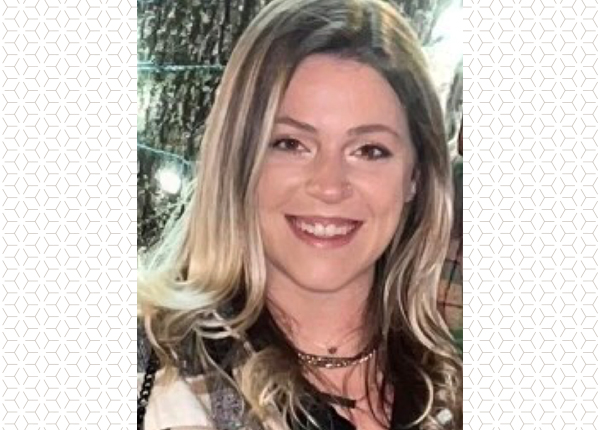
Kaylah Miller '19 works for the State of Connecticut Judicial Branch in the New Britain Superior Court as a family services court intake assistant. Her responsibilities include supporting family counselors, performing clerical duties, obtaining police reports, and checking in clients for hearings, case dates, and resolution plan dates.
As an undergraduate, Kaylah got valuable experience for her current role by interning at the Meriden Superior Court where she worked in child support enforcement. After graduation, she also worked as a real estate paralegal for Keily Mira Law in West Hartford for three years. "Criminal justice is a rewarding field," she says. “You get to help the public and can make a difference in someone’s life.”
Read more about Kaylah.
Criminal Justice, '23
Criminal justice major and sociology minor Mark Zocco ’23 is now working in the Hartford Superior Court’s family clerk’s office after completing an internship with the Connecticut Judicial Branch Experiential Learning Program (JBEL).
Mark says nearly every UHart criminal justice course he took focused on aspects of the criminal justice system. He says courses such as Introduction to Criminal Justice, Criminology, and Law and the Justice System are examples of those that helped him better apply the information he learned in class to the real-life scenarios he experienced and observed during his internship. He says the professionalism and intimate knowledge of the U.S. Criminal Justice System that he learned in the classroom contributed to his success in the internship and his job. Read more.
Each and every one of my criminal justice professors taught professionalism early on as a way to help prepare us for future jobs.
Criminal Justice '07,
January Welks ‘06, U.S. Probation Officer Criminal Justice and Sociology minorYou may learn from a book, but in the field you develop a network and mentors who are going to help you along the way in your career.
Our program helps you prepare for a wide range of careers by addressing the most pressing issues of our time. Sociology has a broad scope and relevance for research, theory, law, and social policy.
Our politics and government program gives you the opportunity to explore your interests and get hands-on experience before you graduate.